

In the Shipbuilding and Ship Repair (SBSR) industry, companies must constantly find ways to improve total ownership cost of ships. This includes costs of design, construction, maintenance and repair, technology refresh/insertion, provisioning, and disposal.
The application of Operations Science coupled with digital technology including 5G networks, Artificial Intelligence and Internet of Things (IoT) sensors has proven to be the vision for industries striving for operational and financial performance transformation.
The delivery of SBSR projects must focus on key production activities such as design, build, commission, deploy, and repair rather than administrative processes centered around reporting, forecasting and assurance. As digital technology becomes more ubiquitous throughout the supply network and work sites, the need for administrative processes will start to phase out and opportunities to leverage self-organizing and self-optimizing production system, a.k.a. intelligent production, will emerge.
The Project Production Institute has formed the Shipbuilding and Ship Repair Working Group to provide the means to transform delivery of complex and critical SBSR projects and services through collaboration on the research, development, application and advocation of Project Production Management (PPM) and technological innovation.

The application of Operations Science coupled with digital technology including 5G networks, Artificial Intelligence and IoT Sensors has proven to be the vision for industries striving for operational and financial performance transformation.
In addition, the delivery of energy projects must focus on key production activities such as design, make, transport, install, commission and maintain rather than administrative processes centered around reporting, forecasting and assurance. As IoT becomes more ubiquitous throughout the supply network and work sites, the need for administrative processes will start to phase out and opportunities to leverage self-organizing and self-optimizing production systems, a.k.a. intelligent production, will emerge.
Based on this, the Project Production Institute has formed the Energy Working Group (EWG) to provide the means to transform how complex and critical field developments, major capital projects and turnarounds are delivered through collaboration on the research, development, application and advocation of Project Production Management (PPM) and technological innovation.
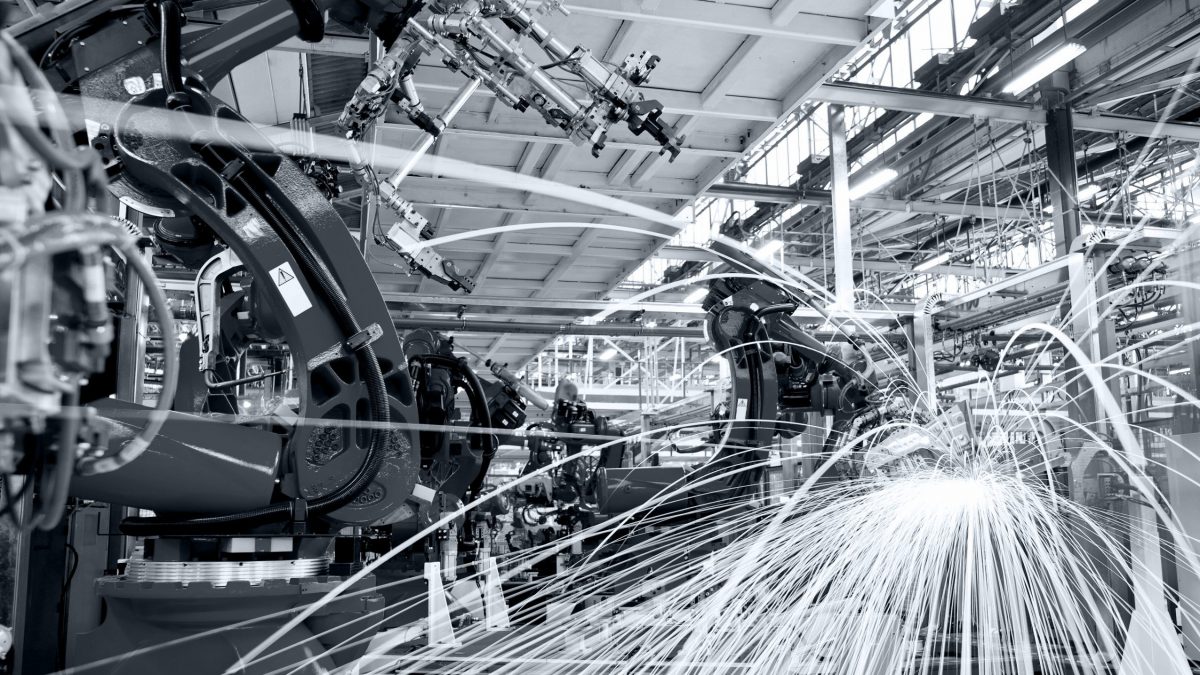
To reduce cost and project duration while also addressing a potential shortage in skilled workers, owners and contractors are looking to “industrialize” construction. This includes use of standard / platform product design, assembly of modules offsite and the use of robotics and other high-volume manufacturing methods.
Industrialized construction (IC) techniques can be utilized to enhance the value achieved throughout a project’s life cycle with the application of Operations Science (OS), automation and mechanization. Digital technology including 5G networks, Artificial Intelligence (AI) and Internet of Things (IoT) sensors support Big Data integration and analysis techniques for risk prediction and optimization of production systems. As IoT becomes more ubiquitous throughout the supply network and work sites, the need for administrative processes will start to phase out and opportunities to leverage self-organizing and self-optimizing production systems, known as ‘intelligent production,’ will emerge.
Because the construction industry is deeply rooted in craft production, it currently operates and is structured differently than high-volume manufacturing sectors such as automotive and consumer electronics. Although the frameworks used for high-volume manufacturing are proven to improve project outcomes, the construction industry is vastly more complex and fragmented, and thus not currently structured to realize the value associated with manufacturing approaches.